
Emergency Water Extraction
Standing water removal for floors, carpet and adjoining rooms. We check where moisture traveled before planning the next stage.
Learn more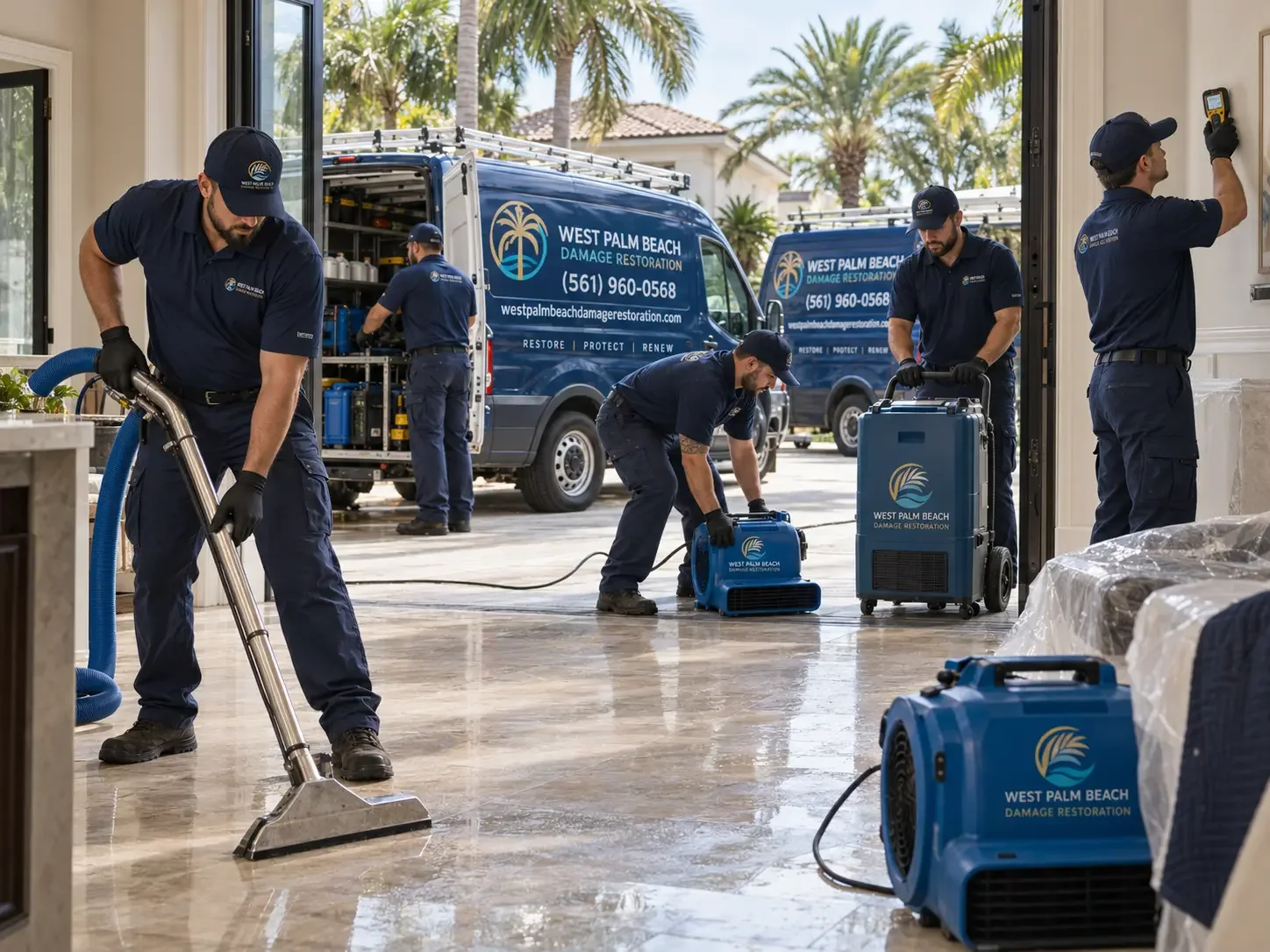
Water, fire and mold damage can leave you unsure what to do next. Start with safe cleanup, measured drying and a clear plan for your property.
Water damage restoration West Palm Beach homeowners need starts with a simple question: where did the water go? West Palm Beach Damage Restoration helps with extraction, cleanup and structural drying after plumbing failures, appliance leaks, storms and other water losses.
A wet floor, ceiling stain or swollen cabinet can point to moisture you cannot see. Our first conversation focuses on the source, affected rooms and immediate safety issues. Then the inspection and written scope establish what needs to be cleaned, dried, removed or repaired.
Call (561) 960-0568 for emergency help, available 24/7. Share your address, when the damage began and any building-access restrictions. Ask for current availability and an arrival estimate; weather, traffic and safe access affect response time.
If anyone is in danger, call emergency services first. Property cleanup follows life safety.
Call (561) 960-0568A failed supply line and outside flooding need different handling. Choose the closest match or call and describe the problem.
Standing water removal for floors, carpet and adjoining rooms. We check where moisture traveled before planning the next stage.
Learn moreA cleanup plan for water entering from outside, with attention to contamination, damaged materials and safe access.
Learn moreCleanup after a failed supply line, pipe or fitting, including moisture checks in walls, flooring and nearby rooms.
Learn moreControlled drying for wet building materials, with moisture readings guiding equipment placement and removal.
Learn moreContaminated water cleanup with isolation, removal of affected porous materials and detailed surface cleaning.
Learn moreHelp tracing water from ceiling stains and roof intrusion into insulation, wall cavities and finishes below.
Learn moreWater removal and drying after storm intrusion, coordinated around safe access and the repair of damaged openings.
Learn moreCleanup for washing machines, dishwashers, refrigerators and water heaters, including concealed moisture beneath cabinets.
Learn moreWater can reach the underside of flooring and the interior of a wall before the surface shows much damage. The longer materials stay wet, the harder it may become to preserve them. Prompt extraction and a controlled drying plan reduce unnecessary exposure, but the right approach still depends on the water source and material condition.
An open window does not automatically dry a concealed assembly, particularly when outside air carries additional moisture. A fan can move air without removing enough humidity. The purpose of restoration equipment is to create useful drying conditions and verify progress with readings.
The U.S. Environmental Protection Agency recommends drying wet materials within 24–48 hours to help prevent mold growth. That is a prevention target, not a promise that every loss will dry in two days. If an odor, visible growth or persistent moisture is already present, tell us before cleanup starts. Read the EPA’s homeowner mold guide for the underlying moisture-control advice.
Know what happens next, what the work addresses and what remains to be completed.
Describe the affected rooms, water source and safety concerns. If the source is active, we discuss safe next steps and whether another trade or emergency authority is needed.
Accessible materials and adjoining spaces are checked. The scope should state where water was found, what needs removal and which areas require closer investigation.
Standing water is removed and the cleanup method reflects contamination. Drying equipment is selected around the remaining materials, access and safe power availability.
Moisture readings guide drying completion. The final discussion separates completed mitigation from remaining plumbing, roofing, flooring or rebuilding work.
A reliable price starts with the affected materials and the work required to return the property to a dry, clean condition. These examples use the same planning assumptions as our calculator. They are not quotes or verified local averages.
| Example scope | Low | Average | High | What drives the price |
|---|---|---|---|---|
| Clean water, 200 sq ft | $1,000 | $1,200 | $1,400 | Extraction and drying allowance; $1,000 minimum applied |
| Gray water, 200 sq ft | $1,000 | $1,350 | $1,700 | Higher cleanup allowance; no replacement add-ons |
| Black / sewage water, 200 sq ft | $1,400 | $2,000 | $2,600 | Contaminated-water allowance; removal and repairs may add cost |
Clean water is modeled at $3.75–$7.00 per square foot, gray water at $4.50–$8.50, and black or sewage water at $7.00–$13.00. The minimum water job allowance is $1,000.
Sudden accidental water or fire losses may be covered, subject to policy terms and deductibles. Mold coverage varies and can be limited or excluded. Ask your insurer to review the cause and coverage before assuming reimbursement.
Compare your inputs in our water cost calculator. Request an on-site scope before approving cleanup or repair work.
Adjust the details for a planning range.
Estimates are based on typical Palm Beach County pricing and are for planning purposes only. Final cost depends on an on-site inspection.
The rates are planning assumptions supplied for this website, not a verified local pricing survey or a binding quote.
Firefighting can leave wet materials behind. A slow leak can reveal mold. The scope needs to account for every condition found at the property.
Burned materials, soot and odor need a cleaning sequence based on residue and surface type. We discuss stabilization, cleanup, contents and water from suppression as separate needs.
Explore fire damage restorationRecurring growth needs attention to the moisture source as well as removal. Inspection, containment and material handling depend on where growth appears and how far it extends.
Explore mold remediation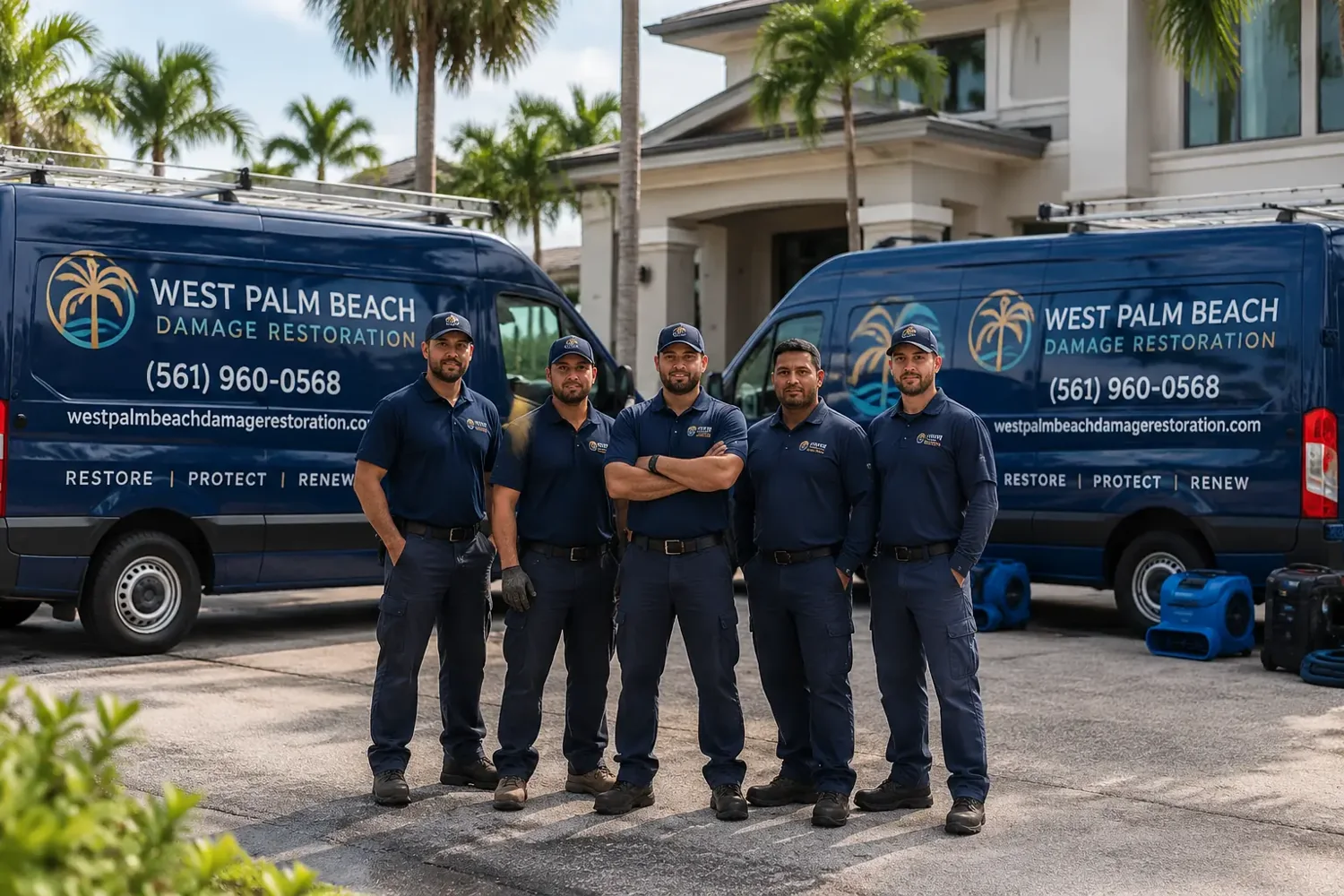
Our business is based at 1897 Palm Beach Lakes Blvd, West Palm Beach, FL 33409. We work with homeowners, landlords, property managers and businesses who need a clear explanation of the damage and the next steps.
You should know what the inspection found, which work is being authorized and what remains outside the scope. Ask about technician credentials, insurance documentation and any specialist or trade needed for your property. We encourage those questions before work begins.
Get to know West Palm Beach Damage RestorationFor a water damage claim, start a simple timeline: when you discovered the problem, what you observed, who you contacted and what was done to limit further damage. Photograph affected rooms and belongings only when it is safe. Keep relevant receipts, the work authorization, written estimates and any drying or cleanup reports together.
The insurer determines coverage. Restoration documentation can support the description of the loss, but it cannot guarantee payment, waive a deductible or replace policy advice. Ask the adjuster whether emergency mitigation, contents handling, temporary accommodation and repairs require separate documentation or approval.
Before signing, understand who is responsible for payment and what happens if the approved insurance scope differs from the contractor’s estimate. Ask whether direct billing is available for your claim; do not assume it is included. A plumbing repair, roof repair or long-term maintenance issue may sit outside the covered restoration work.
Older homes in Northwood, El Cid and Flamingo Park may have layers of finishes or earlier renovations that change how water travels. In the South End, also called SoSo, and near the Intracoastal, the inspection still starts with the individual building; proximity to water alone does not identify the cause of a loss.
Downtown and Clematis Street properties can involve shared walls, tenant access and commercial operating hours. Condominiums and properties around the downtown retail district may require coordination with management for elevators, common areas and neighboring units. Tell us about those constraints during the call rather than after equipment arrives.
For storm losses, distinguish rain entering through an opening from outside water rising into a building. The cleanup and insurance questions can differ. We do not assign a flood-risk category from a neighborhood name; check the property’s official flood information and report what actually happened.
Call to confirm service availability at your address. Our local pages explain property and access considerations for each area.
Proudly serving West Palm Beach and surrounding communities, including Palm Beach, Palm Beach Gardens, Jupiter, Juno Beach, Wellington, Royal Palm Beach, Greenacres, Lake Worth Beach, Lantana, Riviera Beach, Lake Park, North Palm Beach, Palm Springs, Lake Clarke Shores, Haverhill, Mangonia Park, Palm Beach Shores, Westlake, and Loxahatchee Groves.
Our calculators show a planning range, with the assumptions visible. Compare water, fire or mold costs, then request an inspection for an exact scope.
If it is safe, stop the source and keep people away from wet electrical equipment or unstable ceilings. Take photographs from a safe position, then call with the affected rooms and approximate time the leak began. Do not enter floodwater to reach a breaker, and do not delay urgent safety measures to collect photos.
The schedule depends on the materials, contamination, access and how much water is concealed. Extraction may be followed by several days of monitored drying, but there is no reliable universal drying time. Wet insulation, cabinets or enclosed assemblies can require removal or additional work. We discuss the drying stage separately from the rebuilding schedule.
Sometimes. The water source, exposure duration, material condition and moisture readings all affect that decision. Clean water on an accessible floor is different from sewage beneath carpet or swollen particleboard cabinets. We explain the practical salvage options before removal, and the scope should identify both retained materials and items that need replacement.
Sudden accidental damage may be covered by the policy, while wear, maintenance problems and long-term leakage may be excluded. External flooding generally requires separate flood coverage. Your insurer decides the claim. Keep cause-of-loss photos, mitigation invoices and a timeline; ask about the deductible, exclusions and any water-damage endorsement.
We accept inquiries for homes, condominiums, rentals and business properties. Tell us about building-management contacts, gate access, elevator rules and affected neighboring units when you call. A shared-building loss may involve more than one owner or policy. Confirm who can authorize work before a crew opens walls or removes finishes.
No. The calculator provides a low-to-high planning allowance from the inputs you choose. It cannot see hidden water, identify contamination or determine the correct repair scope. An inspection and written estimate are needed before you treat a figure as the job price. Use it to prepare questions, then call for a property-specific estimate.
Tell us what happened, where the damage is and whether water is still entering.